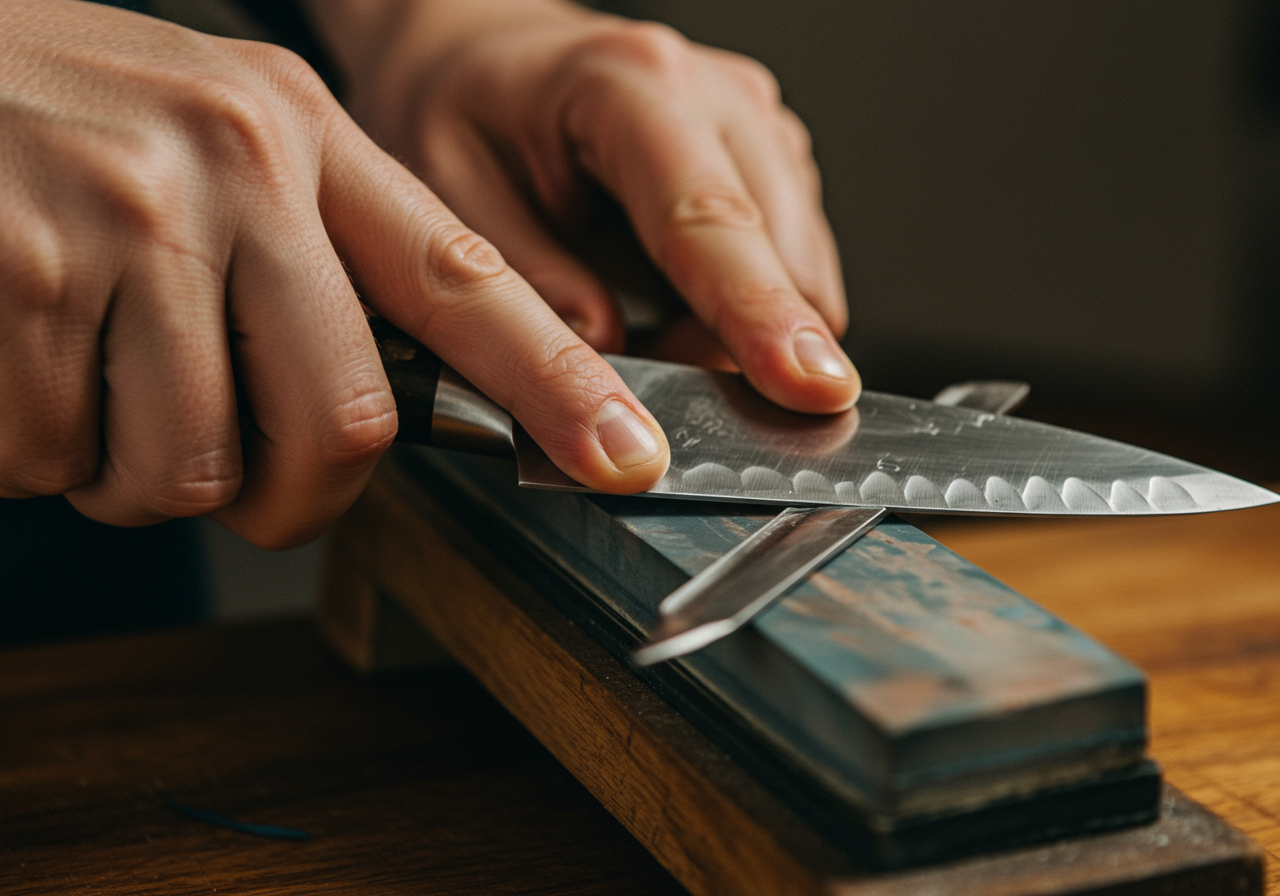
Dull knives are a safety hazard and force you to use more pressure when chopping, leading to uneven cuts and food waste. Plus, constantly replacing dull knives isn’t exactly kind to your wallet or the environment. As a renter, you might think your options are limited when it comes to knife sharpening, but that’s not true! This guide provides simple, eco-friendly sharpening methods perfect for any kitchen, no matter how small. Why Sharpen Your Knives? Beyond safety and reducing food waste, a sharp knife is a joy to use. It makes cooking more efficient and enjoyable. Regular sharpening extends the lifespan of your knives, meaning fewer end up in landfills. This aligns perfectly with a sustainable lifestyle, reducing consumption and waste. Benefits of Sharpening at Home: Cost-effective: Sharpening tools are a one-time investment compared to constantly replacing knives or paying for professional sharpening. Convenient: Sharpen your knives whenever you need to, without leaving your apartment. Eco-friendly: Reduces knife waste and promotes a more sustainable kitchen. Choosing the Right Sharpening Method Several effective and renter-friendly sharpening methods exist. Here are a few popular choices: Honing Steel: A honing steel doesn’t actually sharpen the blade; it realigns the microscopic teeth that make up the edge. Regular honing maintains sharpness between sharpenings. It’s quick, easy, and ideal for everyday maintenance. Electric Sharpeners: Electric sharpeners are convenient and fast, perfect for beginners. They work by grinding the blade to create a new edge. Look for models with multiple stages for a finer edge. Manual Sharpeners: These compact pull-through sharpeners are affordable and easy to store. While not as precise as other methods, they’re a good option for quickly touching up a moderately dull knife. Sharpening Stone: While requiring a bit more skill, sharpening stones offer the best control over the sharpening process. They come in different grits, allowing you to achieve a razor-sharp edge. Look for combination stones with both coarse and fine grits. Sharpening Tips for Renters No matter your chosen method, here are some essential tips to ensure safe and effective sharpening: Read the instructions: Every sharpening tool is slightly different. Familiarize yourself with the manufacturer’s instructions before you begin. Maintain a consistent angle: This is key to achieving a sharp edge. Practice maintaining the recommended angle for your chosen tool. Start slow and apply even pressure: Avoid forcing the knife. Gentle, consistent strokes are more effective. Clean your knives and sharpening tools after each use: This prevents rust and maintains hygiene. Store your sharpening tools safely: Keep them out of reach of children and pets. Testing Your Sharpened Knife After sharpening, test the blade’s sharpness by carefully trying to slice a piece of paper held upright. A sharp knife should slice cleanly through the paper without tearing. You can also try slicing a tomato. A sharp knife will slice cleanly through the skin without resistance. Maintaining Your Knives Once sharpened, proper care helps maintain their edge for longer. Hand wash your knives instead of using the dishwasher, as the harsh detergents and high temperatures can dull the blade. Store knives properly, either on a magnetic strip or in a knife block, to prevent them from knocking against other utensils and becoming dull. With a little practice and the right tools, sharpening your knives at home is a simple and rewarding task. It’s a great way to reduce waste, save money, and enjoy the pleasure of cooking with truly sharp knives.
Sharpen Your Eco-Friendly Kitchen: A Renter’s Guide to Knife Sharpening at Home