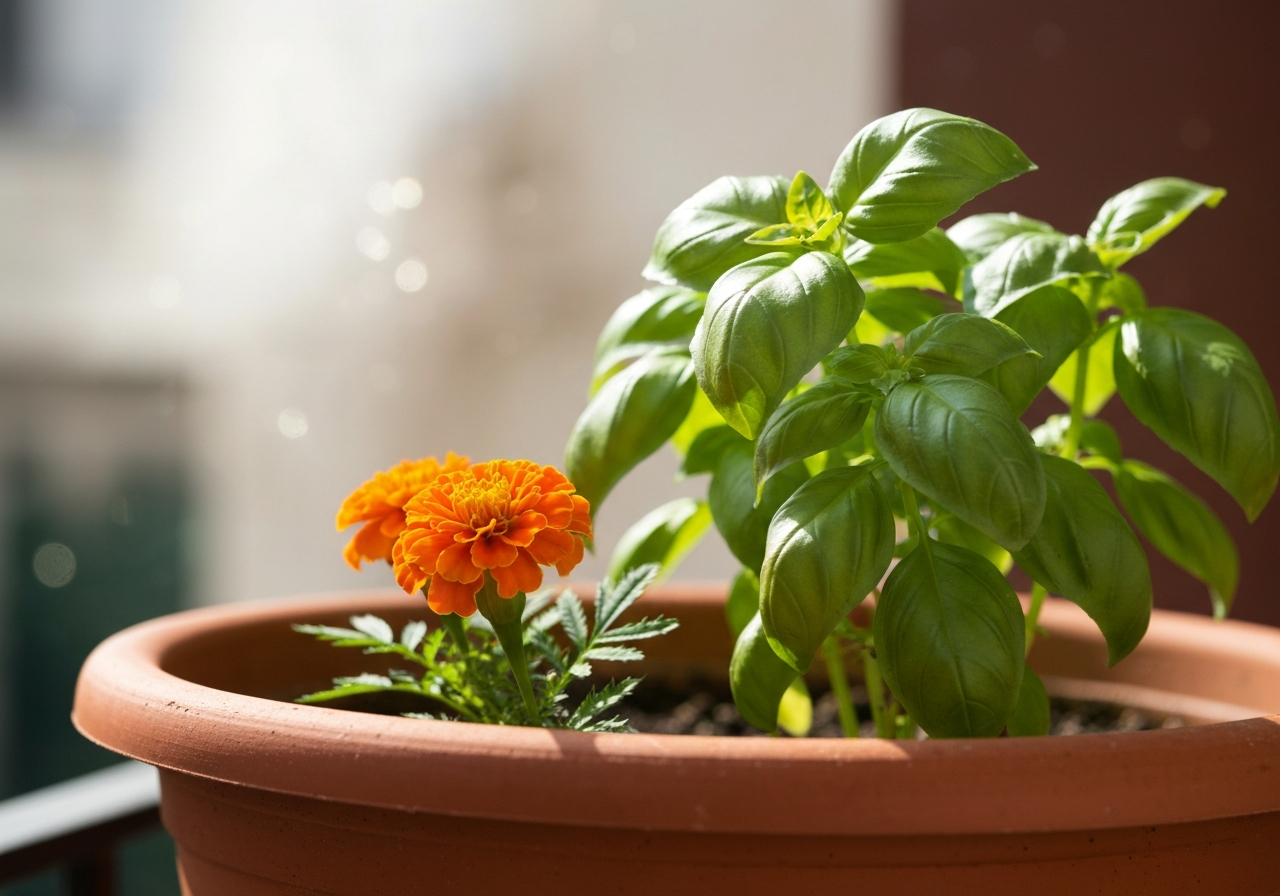
{{There’s nothing quite like stepping out onto your balcony to be greeted by the lush greenery you’ve nurtured yourself. Your little urban oasis is a source of joy, a slice of nature, and maybe even the source of tonight’s salad ingredients. But then you see it: a cluster of tiny green aphids on your tomato plant, or fine, spooky webbing on your basil. Your heart sinks. As a renter committed to an eco-friendly lifestyle, the last thing you want to do is blast your small space—and your food—with harsh chemical pesticides. Don’t worry, you don’t have to. Keeping your balcony garden pest-free naturally is not only possible, it’s also easier than you think and creates a healthier environment for you and your plants. At EcoFriendlyRenter.com, we know the unique challenges of apartment living. This guide is designed specifically for you, focusing on practical, non-permanent, and natural solutions to pest control. Prevention First: A Healthy Garden is a Pest-Resistant Garden The absolute best way to deal with pests is to create an environment where they don’t want to live in the first place. Pests are often attracted to stressed or unhealthy plants. By focusing on a foundation of good plant care, you’re already winning half the battle. Start with Smart Plant Choices Some plants are simply more resilient to pests than others. When you’re picking out new green friends, consider hardy herbs like rosemary, thyme, and lavender. Not only are they tough, but their strong scents can also actively repel many common pests. Also, consider the power of diversity! A monoculture (a balcony full of only one type of plant) is a buffet for a pest that likes that specific plant. Mix it up with different flowers, herbs, and veggies. Master Your Watering Technique It sounds simple, but improper watering is a major invitation for pests. Overwatering can lead to root rot and attract fungus gnats, which thrive in damp soil. Underwatering stresses your plants, making them weak and susceptible to sap-sucking insects like spider mites. The trick? Water deeply but infrequently. Stick your finger about an inch into the soil. If it’s dry, it’s time to water. If it’s still damp, wait another day or two. Keep it Tidy Pests and diseases love to hide and breed in dead or decaying plant matter. Make it a weekly habit to do a quick “clean-up” of your balcony garden. Snip off any yellowing or dead leaves and clear away any fallen blossoms or debris from the soil surface. This simple act removes potential hiding spots and keeps your plants looking their best. Your Renter-Friendly Natural Pest Control Toolkit Even with the best prevention, a few pesky critters might still show up. When they do, you can fight back with these effective, all-natural, and apartment-safe methods. Harness the Power of Companion Planting This is a classic gardening technique that works beautifully in containers. Companion planting is the art of placing certain plants next to each other for mutual benefit. For pest control, it’s a game-changer. Marigolds: These cheerful flowers are powerhouses. Their scent is known to deter aphids, nematodes, and other common pests. Plant one in a pot among your veggies. Basil: Planting basil near your tomatoes can help repel tomato hornworms and whiteflies. Plus, what’s better than a fresh caprese salad? Mint and Rosemary: These fragrant herbs are fantastic for repelling mosquitoes and other flying insects. Important renter tip: Always plant mint in its own container! It’s incredibly invasive and will take over any pot it shares. DIY Pest Sprays (That Won’t Harm You or Your Pets) Forget the store-bought chemicals. You can mix up a potent pest-fighting spray with ingredients you probably already have. Simple Soap Spray: This is your first line of defense against soft-bodied insects like aphids and spider mites. The soap dissolves their outer protective layer. Recipe: Mix 1 teaspoon of a mild, biodegradable liquid soap (like Dr. Bronner’s castile soap) into 1 liter (about 4 cups) of water in a spray bottle. How to Use: Spray directly onto pests, making sure to cover the undersides of leaves. Use in the early morning or evening to avoid sun-scald on the leaves. Always test on one leaf first to ensure your plant isn’t sensitive. Neem Oil Spray: For more persistent pests, neem oil is a fantastic organic option. It’s not a knockdown poison; instead, it disrupts the insects’ life cycle, preventing them from feeding and reproducing. Recipe: Mix 1 teaspoon of pure, cold-pressed neem oil and 1/2 teaspoon of mild liquid soap (as an emulsifier) into 1 liter of warm water. How to Use: Shake well and spray all parts of the plant, including the undersides of leaves. Use every 7-10 days as a preventative measure or every 5-7 days to control an active infestation. Welcome the Good Guys You don’t need to order a box of ladybugs for your small balcony (though you could!). Simply creating a healthy, diverse garden with flowering plants will naturally attract beneficial insects like ladybugs, hoverflies, and lacewings. These are the “good bugs” that prey on pests like aphids. If you spot a ladybug, celebrate! She’s your tiny, free pest control specialist.}}
Natural Pest Control for Your Balcony Garden: A Renter’s Guide